


Fulbright is a scholarship that offers financial support (up to $66,000) to study a Postgraduate degree in the U.S.A (you can learn more about the Award here). I was fortunate enough to win the BAFTA Fulbright Scholarship for the 2026/27 academic year, and I’m keen to help demystify the application process.
A core component of the application is your Personal Statement. This is a 500 word essay that is expected to cover the following:
Conduct a careful, well thought-out self-assessment with reference to the US-UK Fulbright Commission’s values and objectives to be able to demonstrate an understanding of our mission as well as how you can further it.
Compose a narrative essay in which you include information about your formative experiences (educational, professional, personal), personal and professional ambitions and special non-academic, extracurricular interests.
Describe who you are, what your goals are, and what you hope to achieve in the U.S. and upon your return to the UK.
Outline your motivations, relevant preparations for and expectations of the Fulbright Programme.
Do not repeat the study objective essay or provide a narrative of your CV.
Remember: the personal statement is an indication of your written communication skills. Make sure it is well organised, written and spell checked.
My Advice:
There’s great official advice on how to write the essay and what the Fulbright Commission are looking for (check out Fulbright’s guide here). I think the best advice I can give is to simply share the essay that worked for me (and won me the Fulbright BAFTA Scholarship).
I will caveat this by saying I went a bit rogue. I tried writing standard drafts, but trying to squeeze my cross-cultural life story into 500 words felt incredibly clunky. So, I took a gamble and wrote my personal statement as a screenplay. I guess it paid off, but this is just to say that you don’t have to do something high-risk like this. But if there is a way to bring a bit of your creativity, or your subject into the personal statement, I would try to do this to make you stand out.
Keep in mind that the example below was specifically for the BAFTA Fulbright Scholarship, so it’s slightly different from other Master’s programmes, but hopefully it helps give a sense of what they’re looking for.
My Fulbright Personal Statement:
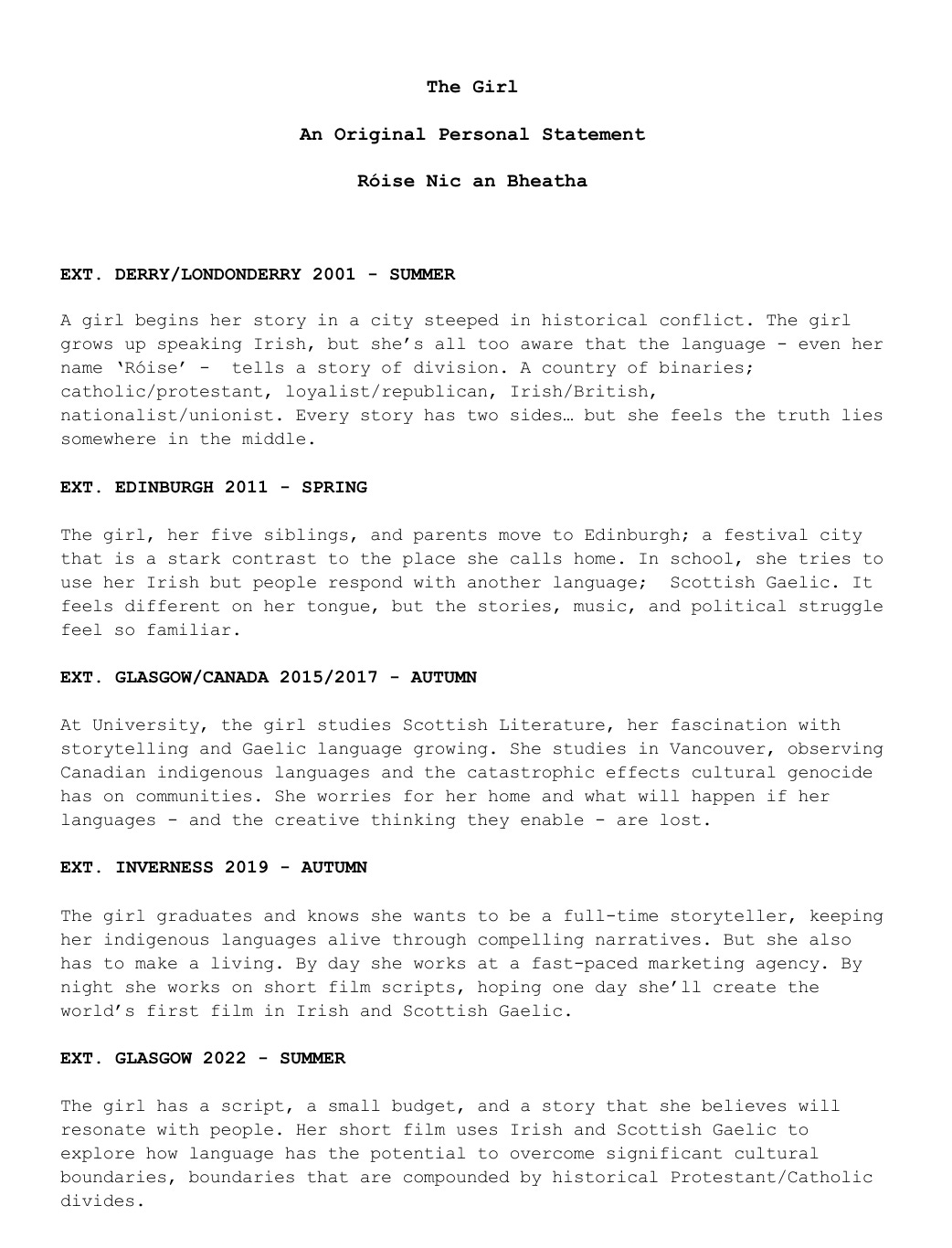
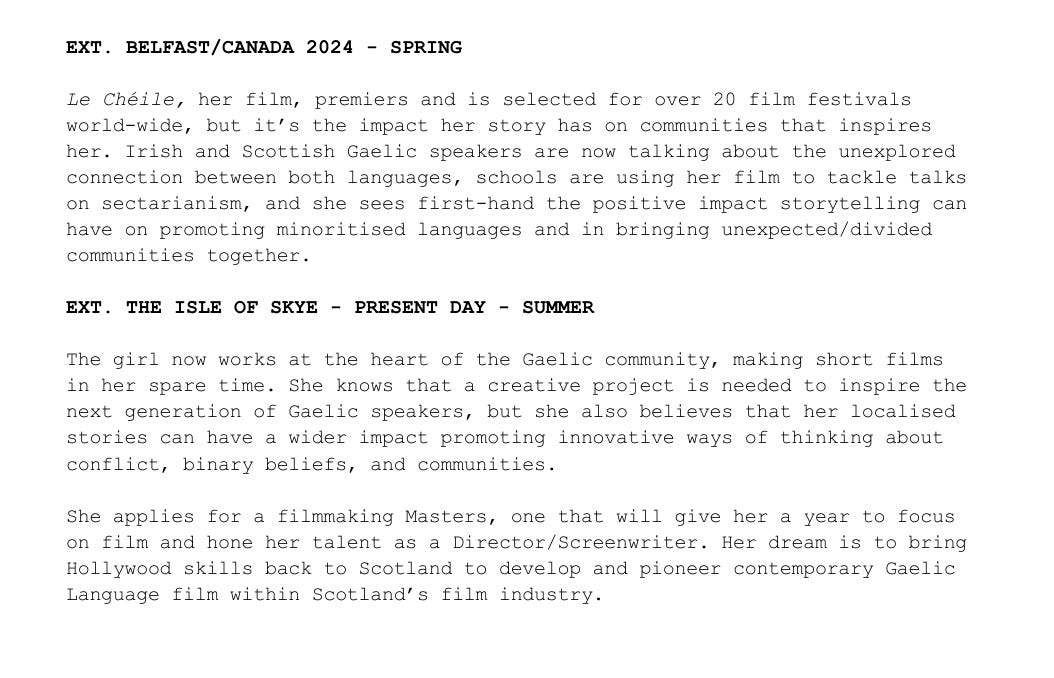
END.
As always, send me a message at roise_nab if you have any specific questions.